ESG Malaysia Summit 2025 Concludes with Industry Milestones and Clear Direction for Malaysia's ESG Agenda
KUALA LUMPUR, Malaysia, Dec. 26, 2025 /PRNewswire/ -- The ESG Malaysia Summit 2025 has successfully concluded, bringing together policymakers, business leaders, industry practitioners, and sustainability experts to advance Environmental, Social and Governance (ESG) adoption across Malaysia and ASEAN, and address the evolving ESG landscape shaping ASEAN's competitiveness, export readiness, and long-term resilience.
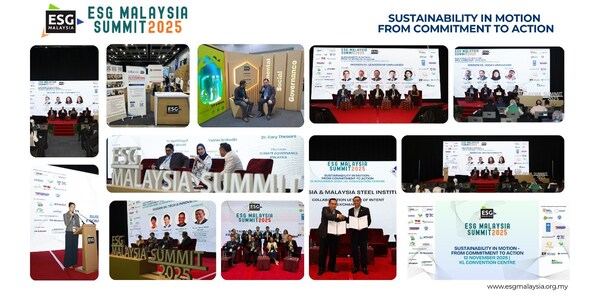
ESG Malaysia Summit 2025 Concludes with Industry Milestones and Clear Direction for Malaysia’s ESG Agenda
A key milestone of the Summit was the formal exchange of a Letter of Intent (LOI) between ESG Malaysia and the Malaysia Steel Institute (MSI), marking a strategic collaboration to accelerate ESG readiness and adoption within Malaysia's steel and metal sector. Led by YBrs. Mr. Steven Lee, President of ESG Malaysia, and Ts. Dr. Nurul Muiz Murad, CEO of MSI, the partnership focuses on embedding ESG principles into one of ASEAN's most critical manufacturing industries.
The LOI reflects Malaysia's growing commitment to responsible industrial development and supports its role as a reference for ESG integration in heavy industries across ASEAN, in response to increasing global expectations on sustainability and climate disclosure in international markets.
Aligning ASEAN Businesses with Global Sustainability Expectations
The ESG Malaysia Summit 2025 addressed critical regional themes, including supply chain transparency, climate risk, sustainability reporting, and the alignment of ASEAN businesses with international frameworks such as IFRS S1 and S2, as well as emerging climate-related trade and disclosure requirements.
Karl Godderis, CEO of EUROCHAM Malaysia, commented:
"The Summit created a timely dialogue between Malaysia's domestic sustainability priorities and the sustainability expectations of international markets. This is especially relevant as ASEAN economies navigate evolving trade agreements and global climate commitments."
Christopher Ng, Chairman of Digitalisation at SAMENTA and representative of Trinity42, added:
"The Summit delivered valuable market intelligence for businesses operating across ASEAN. Discussions on future-proofing operations and digitalisation strongly aligned with how companies must adapt to the region's next phase of growth."
Yazmin Islahudin, Head of Sustainability, EDOTCO Group, highlighted the importance of continued engagement:
"As the sustainability landscape evolves at an unprecedented pace, ongoing dialogue is essential. The ESG Summit provides a vital platform for industries, regulators, and partners to remain aligned as expectations change. EDOTCO is honoured to contribute and looks forward to continuing our role in shaping the sustainability agenda with ESG Malaysia."
Participants consistently highlighted the Summit's practical focus and strong engagement, noting its value in translating ESG commitments into actionable strategies across diverse ASEAN markets.
Regional Collaboration at the Core
Supported by an extensive ecosystem — including EUROCHAM Malaysia, SME Corp. Malaysia, CanCham Malaysia, SAMENTA, Climate Governance Malaysia, the Energy Industries Council (EIC), Eco-Business, Malaysia Steel Institute (MSI), Orbis Business School, and GEDS — the Summit demonstrated the importance of public-private collaboration in advancing ESG adoption across ASEAN.
Sustaining ASEAN ESG Momentum
Founded in 2022, ESG Malaysia continues to play a critical role in advancing ESG awareness, climate risk mitigation, and practitioner capability development beyond national borders. Key post-Summit initiatives include:
- Expansion of the ESG Malaysia Education Hub, supporting ASEAN professionals with certified training in sustainability accounting, assurance, and climate reporting
- Development of sector-specific ESG programmes relevant to regional manufacturing, SMEs, and exporters
- Progress toward forming an ASEAN ESG Alliance, with strategic partners in mainland China, Taiwan region, Korea, and Japan, strengthening Asia-wide ESG cooperation and knowledge exchange
- Establishment of a dedicated ESG Malaysia Secretariat Office to support structured regional engagement
PR Newswire is the sponsored media of ESG Malaysia Summit 2025.
About ESG Malaysia
ESG Malaysia is a non-profit organisation dedicated to advancing environmental, social, and governance (ESG) practices across Malaysia and ASEAN. Through advocacy, partnerships, and capacity-building, ESG Malaysia empowers public, private, and non-profit sectors to strengthen sustainability frameworks, align with global standards, and build a climate-resilient, inclusive economy.